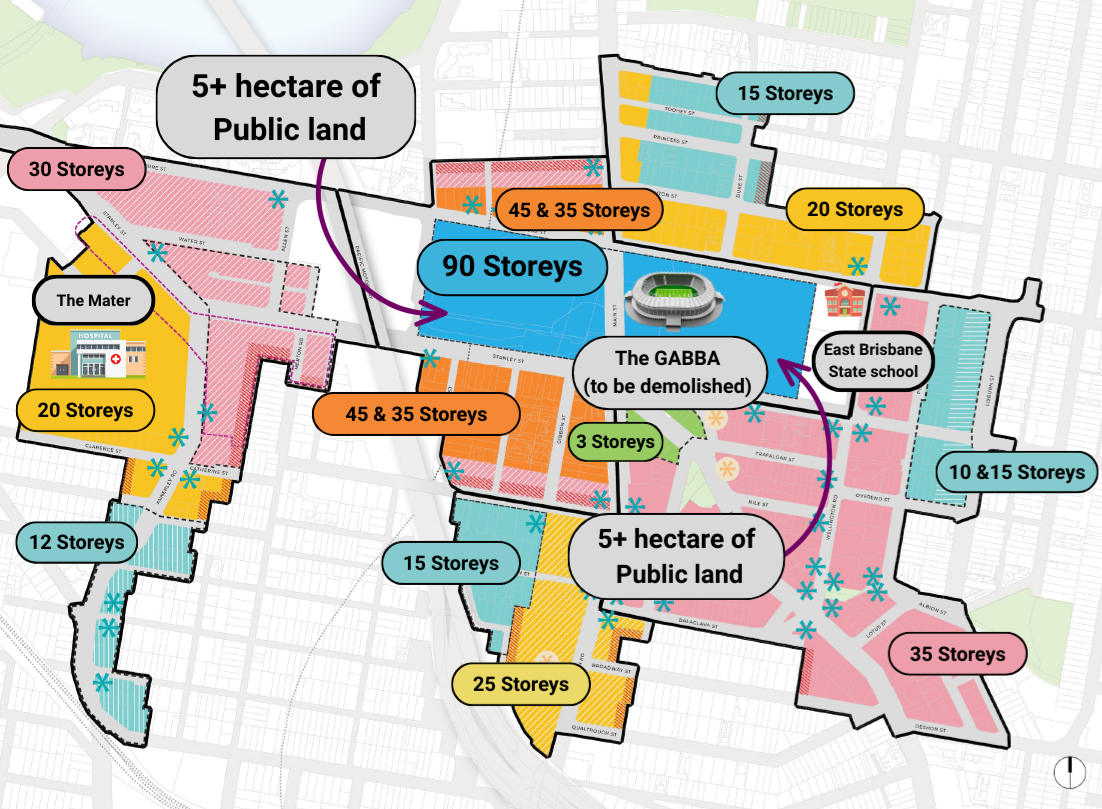
The Woolloongabba Priority Development Area (PDA) is a HUGE 106-hectare zone spanning Woolloongabba, East Brisbane, and Kangaroo Point. The area is centred around the Gabba Stadium, Go Print Site and the new Cross River Rail station. Within this zone, the PDA overrides local planning rules, making the state government the primary decision-maker for any developments.
On Thursday last week (7 August 2025), the LNP State Government announced amendments to the current PDA. Residents were given only 15 business days to respond, with consultation closing on Friday, 29 August 2025.
How Can I Make a Submission?
The PDA amendment is now open for public submission until 29 August 2025. I encourage residents to provide feedback to Economic Development Queensland (EDQ) on the proposed amendments to the Woolloongabba PDA.
To make a submission:
- You can use my Submission Guide and Submission Template here
- Head to the EDQ consultation page here or email [email protected]
- You can read my joint submission with MP Micheal Berkman here.
Key Issues from the amended Woolloongabba PDA:
- Social and Affordable Housing Provisions: The amendments have removed previous commitments to include social and affordable housing in the development plan. This is a crucial aspect, as these provisions would ensure that a percentage of new homes are accessible to low and moderate-income families. Restoring these commitments would address the ongoing crisis of housing affordability in the area.
- Identification of Public Spaces: Earlier versions of the plan included clear guidelines on protecting and expanding public green spaces. The current amendments dilute these provisions, jeopardising the availability of parks and recreational areas for the community. Restoring strong protections for public parks is vital for maintaining community well-being and environmental health. The amendments remove the commitment to 50% greenspace on the Cross River Rail site, replacing it with a narrow “green corridor” and a single 0.8 ha pocket park. This represents a significant downgrade from what was promised. Green spaces are not just aesthetic features—they are essential infrastructure for our growing communities. They provide critical cooling in a warming climate, improve air quality, reduce flooding impacts, create safe spaces for children to play, offer places for social connection, and support the mental and physical health of residents. In a high-density area like Woolloongabba, losing guaranteed large-scale greenspace undermines liveability and long-term community wellbeing.
- Protection Against the Sale of Public Land: The amendments have removed previous protections that prevented the privatisation of state-owned land in the Woolloongabba area. This is a significant concern because the sale or leasing of public land could lead to the loss of vital community resources and spaces. Restoring these protections is essential to ensure that public land remains in community hands, promoting the development of affordable housing, parks, and essential services that benefit everyone, rather than allowing it to be sold off for private profit.
- Community Consultation: Previous drafts of the development scheme included provisions for extensive community input and consultation. The current amendments limit this engagement, effectively silencing the voices of residents who will be impacted by the development. Reinstating robust community consultation processes is essential for ensuring that local opinions and needs are considered.
- Strategic Planning for Future Education Facilities: The amendments lack a clear plan for additional schools to accommodate the growing population in the area. Including provisions for new educational facilities is essential to support families and ensure that children have access to quality education within the community.
- How It's Undemocratic: The current process is undemocratic because the short consultation period only 15 days dismisses the important perspectives of local residents. This limited timeframe undermines proper public engagement and prevents meaningful dialogue about how the development will affect the community. By sidelining community voices and reducing transparency, the government is prioritizing the interests of property developers over the needs and concerns of everyday people, which is contrary to the principles of democratic decision-making.
If you would like to read more historical information about Woolloongabba PDA, please visit my Woolloongabba Priority Development area page here.