Following community consultation, I am pleased to provide the following consolidated feedback regarding the proposed greenspace expansion and protected bike lanes along Hampstead Road. This feedback reflects concerns, aspirations, and constructive suggestions raised by residents, local institutions, and active transport users.
Who completed the survey
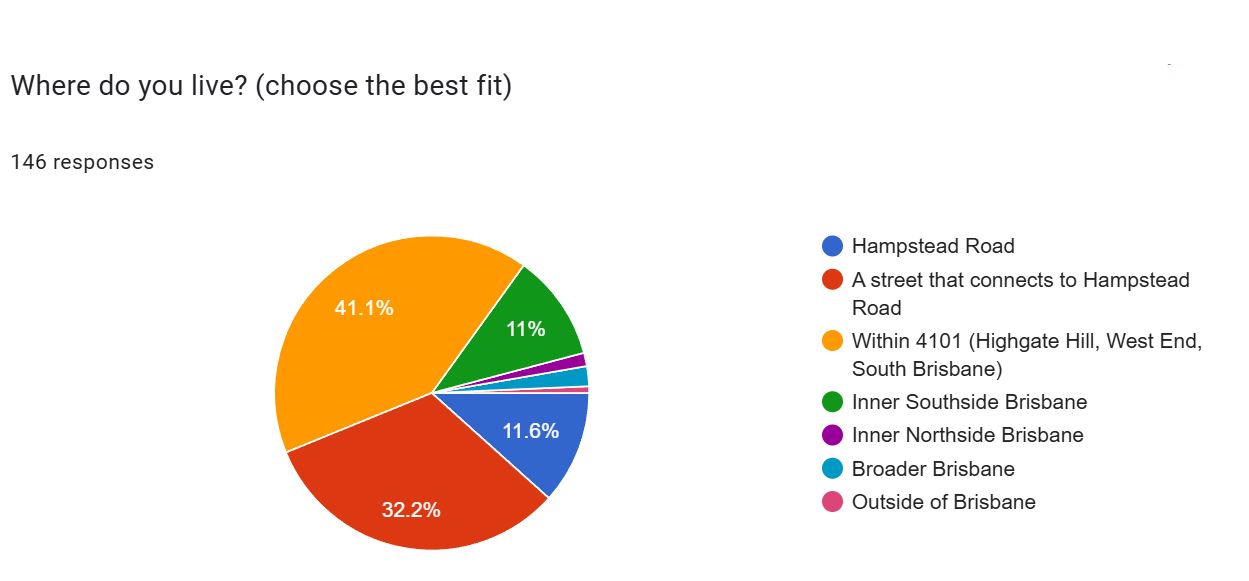
There were 146 people who completed the survey, with almost half of the respondents being people who live on or next to Hampstead Road (43.8%). The vast majority of respondents were locals who live within 4101 (84.9%).
This shows that the results of the survey prioritise local voices and I am treating this like a snapshot of the local sentiment. There were specific responses from residents, businesses owners, and community organisations.
How do respondents currently use Hampstead Road?
The vast majority of people travel or commute along Hampstead Road (78.1%). Just over half of the correspondents visit Highgate Hill Park (54.8%).
Driving was the most common form of transport people use along Hampstead Road (82.9%), with people walking coming in a close second (71.9%).
A large minority of people used bikes (34.2%), e-bikes (12.3%), or e-scooters (4.8%) to travel along the corridor.
Given how infrequent the 198 is, a surprisingly high number of people used public transport along Hampstead Road (19.2%).
Which Concept Design was preferred?
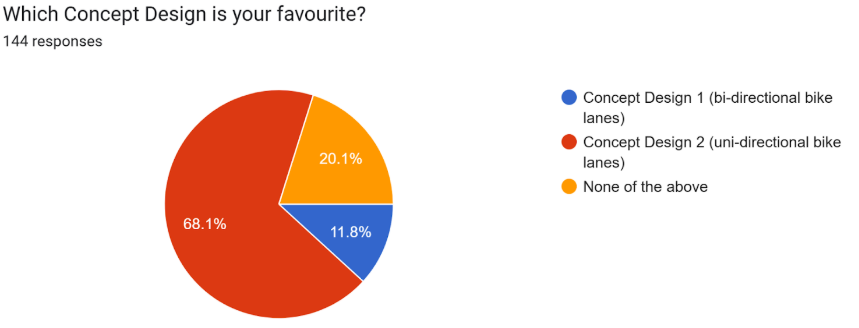
There was strong support for Concept Design 2 (68.1%) which included separated bike lanes on both sides of the road.
Did respondents support traffic lights at the Hampstead Road/Dornoch Terrace intersection?
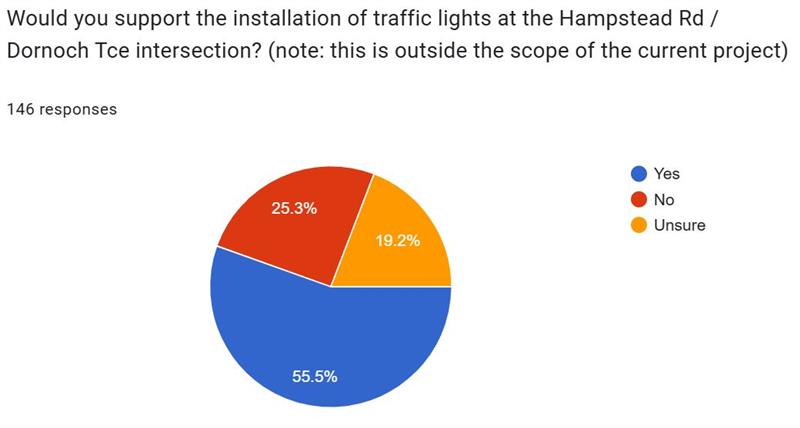
A slight majority of people supported traffic lights at this intersection (55.5%), with a relatively high proportion of people uncertain (19.2%).
This intersection was also highlighted as one of the key locations that people wanted better pedestrian crossings. Traffic lights are the only design option that can ensure pedestrians are able to cross the road safely. This is because the crest of the hill makes it hard for drivers to see pedestrians until it is too late to stop.
Building traffic lights at this location would likely cost in the millions and so is not something I can fund through my Suburban Enhancement Fund. I will continue advocating for Brisbane City Council to allocate funding for this essential pedestrian safety upgrade.
What did respondents think about the design of side streets intersecting with Hampstead Road?
Pedestrians, bike riders, and drivers travelling along Hampstead Road already have the right of way. Drivers entering Hampstead Road from a side street legally have to give way to pedestrians, bike riders, and drivers.
Despite the road rules, I often hear stories from pedestrians that most drivers do not give way to them as required. This could be because most people don’t understand this road rule and our roads are not designed to reinforce who has right of way in this situation.
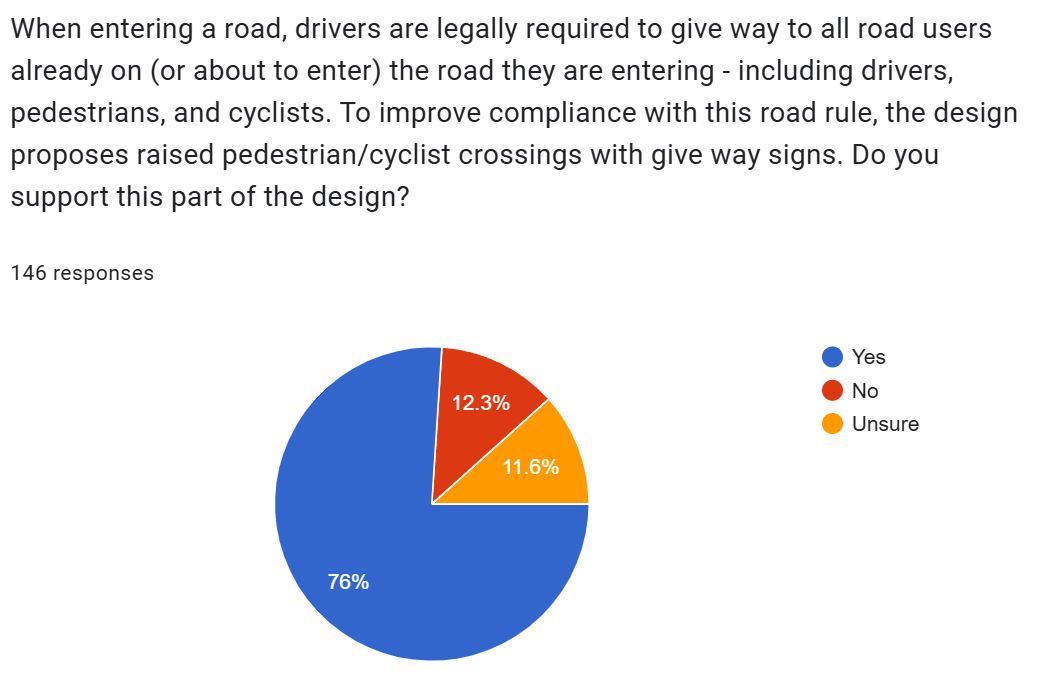
Both concept designs included a novel design that made it very clear who has right of way at each side street intersection. There was extremely high support for this proposal (76%).
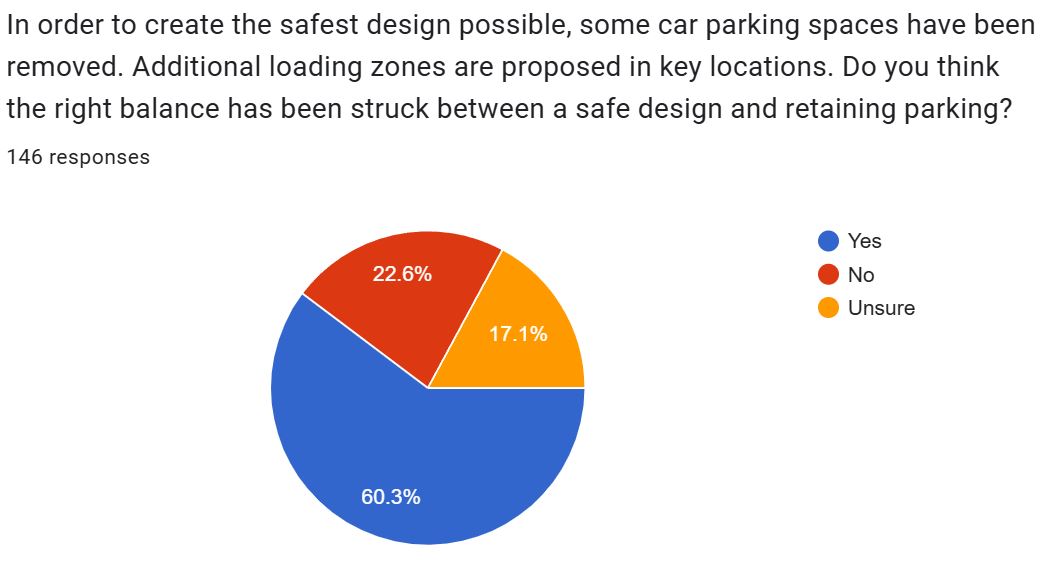
Did respondents think the designs struck the right balance between safe design and parking retention?
A firm majority of people were supportive of the amount of parking retained in the proposals (60.3%). There was also a good suggestion from one respondent to convert some unlimited parking spaces to 2 hour resident excepted spaces. This would benefit both residents and business owners by preventing the street from being used as vehicle storage for commuters travelling to the city.
What specific feedback was received that would improve the design?
1. Modal Conflict on Shared Paths – Request for Modal Separation
There was significant concern about proposed shared paths along Hampstead Road, particularly in sections:
- Near Highgate Hill Park and
- On the western side between Brighton Road and Vulture Street
In both locations, residents raised safety concerns regarding high-speed bikes and e-scooters mixing with slower-moving pedestrians. These shared paths are seen as unsafe and inappropriate for high-traffic active transport corridors.
Requests:
- Separate infrastructure for pedestrians and cyclists/micro-mobility.
- Consider reallocating road space to allow for full modal separation, particularly by removing the barrier between left and right turning vehicles at the Dornoch Terrace approach, to gain extra width.
2. Preservation of Highgate Hill Orchard
There is strong opposition to any design that results in the removal or relocation of the Highgate Hill Orchard at the top of the ridge. The orchard is a well-loved community asset with cultural and ecological value. Preserving this site must be a design priority.
3. Urban Form – Meandering Road Design to Promote Greenspace and Safety
There is community appetite for a more meandering road alignment, particularly in key sections, to:
- Reduce vehicle speeds naturally,
- Create more generous greenspace on one side of the road, rather than equal but narrow verges on both sides.
This approach would improve pedestrian and cycling amenity while enhancing visual and ecological outcomes.
4. Vehicle Speed Reduction on Side Streets
Residents have requested sharper curve radii at side street intersections to naturally slow down vehicles turning onto or off Hampstead Road. This would improve safety for all road users and create a more pedestrian-friendly environment.
5. Loading Zone Adjustment – St Nicholas Retirement Village
St Nicholas Retirement Village has requested an extension of the proposed loading zone, which could not accommodate multiple fire trucks during emergency callouts when alarms are triggered.
Request:
- Extend the loading zone slightly downhill by reclaiming a portion of adjacent greenspace.
6. Public Realm Enhancements
There is a strong desire to see more active, welcoming public spaces incorporated into the design. Suggestions include:
- Street furniture (benches, tables),
- Small garden beds or verge gardens,
- Urban design elements to support community interaction.
Request:
-
Involve an urban designer in the next stage of detailed design to ensure these elements are integrated meaningfully and displayed on the design proposal.
7. Concern About Usable Public Space
A small number of respondents expressed concern that public realm improvements could encourage anti-social behaviour in newly activated spaces. This highlights the importance of community-building alongside infrastructure upgrades. By designing spaces that are welcoming and well-used, and encouraging regular community presence, we reduce the opportunity for anti-social behaviour and create a safer, more inclusive street environment.
8. Greening and Tree Canopy
Residents have emphasised the importance of increasing shade on pedestrian and bike paths. New street trees should be prioritised in all redesigned sections, especially near uphill climbs and waiting areas.
9. Parking Management – Permit Zones as a Compromise
Where parking is to be removed to accommodate safer infrastructure, residents and business owners suggested mitigating impacts by increasing resident permit parking. This would:
- Deter all-day commuter parking,
- Support short-term use by local residents and business patrons.
10. Further Consultation Required on Bike Lane Design
There was strong support for protected bike lanes as part of the redesigned street layout. These lanes make less confident riders, including children and new cyclists, feel safer, while also reducing stress for drivers and pedestrians by clearly separating transport modes.
However, there were also a range of concerns about how bike lanes should be implemented and managed:
- Downhill cyclists, especially on steep sections, may reach speeds above 35km/h, creating safety concerns where driveways intersect with the bike lane. Residents worry that drivers exiting properties may not see or anticipate fast-moving riders.
- There is a concern about conflict between fast-moving cyclists and slower pedestrians, particularly near areas where children may be present or where pedestrians may accidentally step onto the bike lane.
- While separated lanes increase safety, some residents noted that protected bike lanes can fragment verge space, reducing opportunities for it to be used as public space for things like seating, trees, or gardens.
To help resolve these issues, I’ll be conducting an additional short survey seeking your input on how bike lanes should be handled along the corridor.
11. Pedestrian Priority Crossings
Of all the pedestrian crossings along Hampstead Road, the traffic island crossing at Blakeney Street was specifically identified as in need of an upgrade. The consistent request was to convert it into a zebra crossing, to improve pedestrian priority and safety.
12. Accessibility Improvements – Braille Trail
There were several requests to explore the inclusion of braille trails or other accessible guidance features as part of the footpath upgrades to ensure the corridor is inclusive for vision-impaired pedestrians.
13. First Nations Cultural Recognition – Sacred Site Plaque
Community members have requested a plaque or interpretive signage to acknowledge the sacred site/Bora ring that once existed near the Brighton Road intersection. Incorporating this recognition aligns with broader community sentiment around acknowledging Yuggera and Turrbal sovereignty and place-based storytelling.